
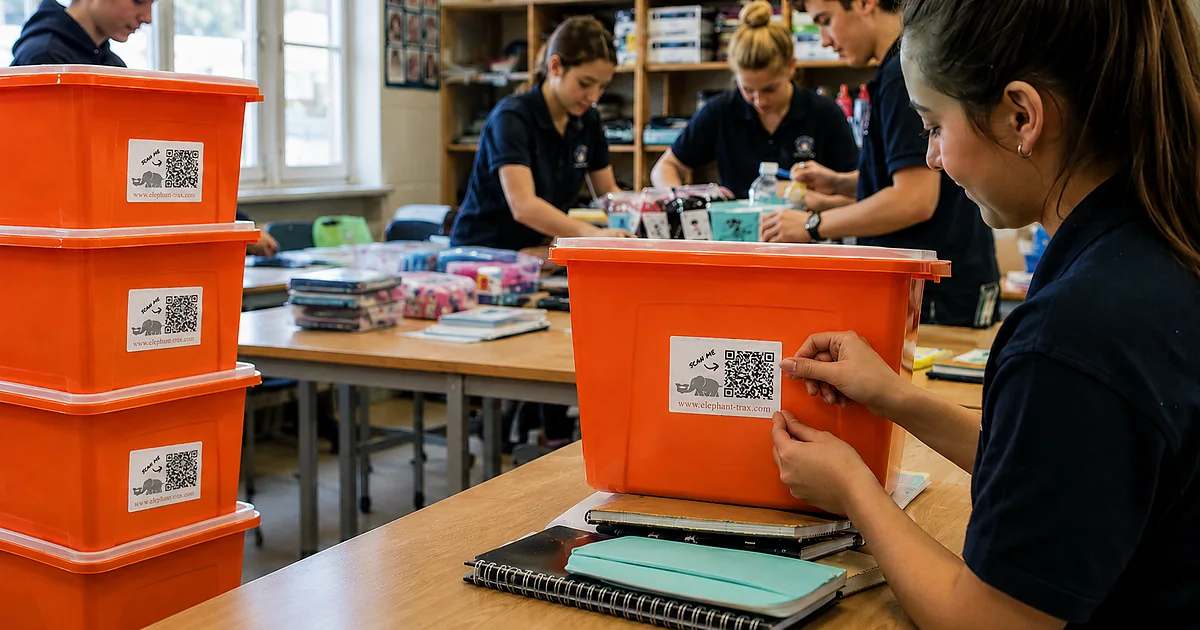
Dorm Move-In Made Easy: Organizing Your Boxes with QR Codes
Move-in day always looks the same: a hallway stacked with identical cardboard boxes, a tiny dorm room with barely enough space to turn around, and a roommate asking “which box has the extension cords?” while you both stare blankly at a wall of unmarked totes. Packing for a new semester doesn’t have to end in that scramble. With a QR code system, you can walk into your dorm knowing exactly what’s in every box before you even open it — and that’s exactly the kind of move-in chaos Elephant Trax was designed to fix.
Why Dorm Move-In Gets Messy So Fast
Packing for college is different from a normal move. You’re not just relocating — you’re compressing an entire bedroom, bathroom, and sometimes a kitchen into a handful of totes that all need to survive a car ride, an elevator, and a shared, cramped room. Add in the fact that most students pack in a hurry the week before classes start, and labels tend to get vague fast: “clothes,” “misc,” “room stuff.”
The problem isn’t the packing itself — it’s that a handwritten label only tells you what you intended to put in a box, not what’s actually still inside it after you’ve already dug through it twice looking for a phone charger. By the time you’re unpacking in your new room, half the labels no longer match the contents.
How QR Codes Fix the Dorm Packing Problem
A QR code label works differently than a Sharpie and a piece of tape. Instead of writing a static guess on the outside of a box, the label connects to a digital record you can update any time. With Elephant Trax, you scan QR code stickers as you pack, snap a quick photo or type a short list of what’s going inside, and that information stays tied to the label — even if the box’s contents change later.
That means when you’re standing in your dorm room trying to find bedding, towels, or your desk lamp, you don’t have to open five totes guessing. You scan the QR code, and your phone shows you exactly what’s inside, right down to the last item you added.
Setting Up a QR Code Packing System Step by Step
1. Sort before you pack. Group items by room or category — bedding, bathroom, desk supplies, clothing, electronics. Packing randomly makes even a labeled system harder to use later.
2. Label every box and tote individually. Each container gets its own unique QR code, placed somewhere visible and flat so it’s easy to find and scan once boxes are stacked in a hallway or elevator.
3. Build the digital contents list as you pack. As each item goes into the box, open the app and add it to that box’s record — either as a quick list or a photo. This is the step that actually makes the system useful later, not just organized-looking.
4. Tag with searchable keywords. Add keywords like “towels,” “charger,” or “desk lamp” so you can search across all your boxes instead of scanning one by one when you’re not sure which tote something landed in.
5. Keep updating after move-in. Once you’re settled, update the records as you rearrange things. A packing system only stays useful if it evolves with you through the semester.
Shop QR Codes Before Move-In Day
The best time to set this up isn’t the night before you move — it’s a week or two ahead, while you’re still packing at a relaxed pace. Elephant Trax offers pre-made QR label packs built for exactly this kind of use: durable enough to survive a car trunk, a dolly ride, and a semester of dorm storage under a bed. Students can shop QR codes designed specifically for totes and moving boxes, rather than relying on office labels that peel off after one trip up a stairwell. Having a stack of labels ready before you start packing turns this from an extra chore into a five-second step per box.
Best Practices for a Smooth Move-In
- Don’t label every single item — group by box instead. One QR code per tote is enough; you don’t need a code on every t-shirt.
- Keep a consistent labeling spot on each box, like the top-left corner, so scanning is fast even when boxes are stacked.
- Photograph awkward items. Cables, chargers, and small hardware are much faster to identify with a quick photo than a text list.
- Share access with a roommate or parent helping you move, so everyone can scan a box and know what’s inside without asking you first.
- Do a mid-semester check. Update your box records once you’ve unpacked and settled in, so your system stays accurate for winter break repacking too.
Why This Matters Beyond Move-In Day
A QR code packing system isn’t just useful for the chaotic hour of move-in — it pays off all semester. When it’s time to grab winter clothes from storage, find a specific charger cable, or repack for the next break, you’re not guessing which tote to open. You scan, you see the contents, and you grab exactly what you need.
It also scales naturally. The same system you use for a dorm move-in works just as well for repacking at the end of the year, moving into an apartment, or even organizing shared supplies with roommates — because the labels stay put while the information behind them updates as your life does.
Final Thoughts
Packing for a new semester goes wrong most often because labels can’t keep up with what’s actually inside a box. QR codes solve that by separating the physical label from the contents list, so you can update information anytime without repacking or relabeling anything. Start with a few boxes, scan as you go, and by the time you’re carrying totes up to your dorm room, you’ll already know exactly what’s waiting inside each one.

