
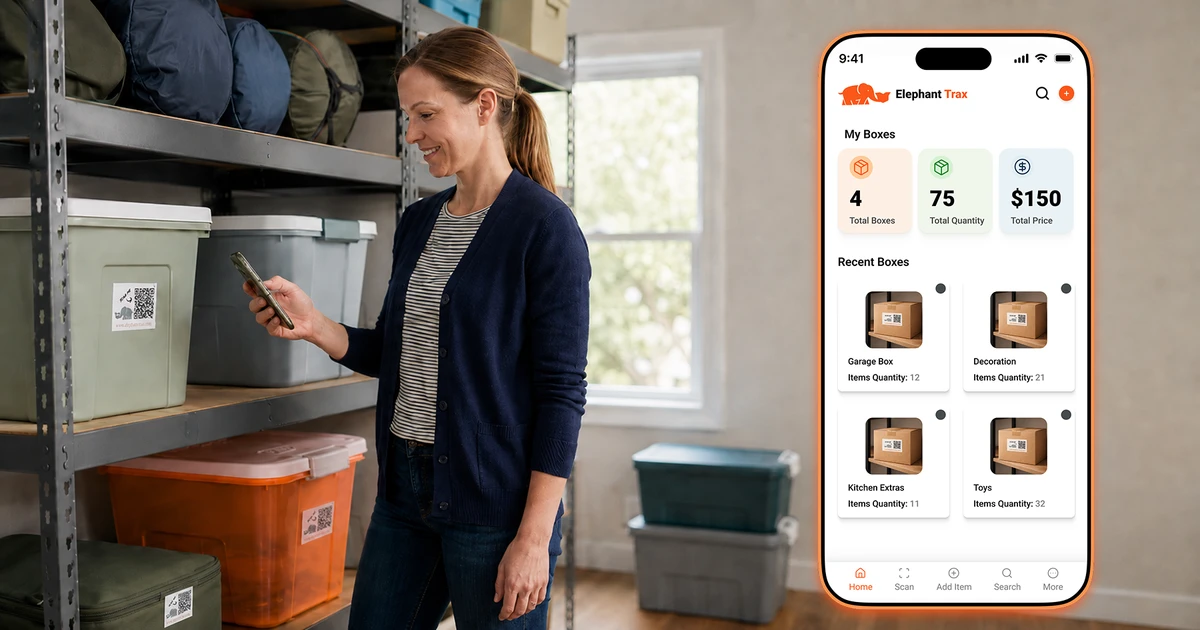
How QR Codes Make Storage More Efficient
Staying organized becomes increasingly difficult as homes fill with seasonal decorations, keepsakes, office supplies, tools, and moving boxes. Traditional handwritten labels often provide little information, making it frustrating to locate specific items without opening multiple containers.
Modern technology offers a smarter approach through QR Codes. By connecting physical storage boxes to digital inventory records, homeowners can instantly view what’s inside a container with a simple smartphone scan. This method saves time, reduces clutter, and creates a more efficient storage system.
Platforms like Elephant Trax help users organize belongings using smart QR labels and digital inventory management, making storage easier to manage and search.
Why Traditional Storage Methods Fall Short
Many people rely on masking tape and permanent markers to label boxes. While this may work for a short period, it becomes difficult to remember exactly what each box contains over time.
Common storage challenges include:
- Opening several boxes to find one item
- Losing track of seasonal decorations
- Misplacing important documents
- Buying duplicate household items
- Spending unnecessary time searching through storage
As storage needs grow, these manual methods become less effective.
What Are QR Codes?
QR Codes (Quick Response Codes) are two-dimensional barcodes that store information digitally. Unlike traditional barcodes, QR codes can contain much more data and can be scanned using almost any smartphone.
For storage management, each QR code is linked to a digital inventory record. Instead of writing “Kitchen Items” on a box, users can scan the QR code to view a detailed list of everything stored inside.
This creates a searchable inventory without opening a single box.
How QR Codes Improve Storage Organization
QR technology transforms ordinary storage containers into smart storage solutions.
With a simple scan, users can access:
- Item descriptions
- Photos
- Categories
- Notes
- Storage locations
- Inventory updates
Instead of relying on memory, homeowners have complete visibility into their belongings.
This makes organizing closets, garages, basements, attics, and moving boxes much easier.
Benefits of Using QR Code Storage
A digital inventory system offers several advantages over traditional labeling.
Faster Item Searches
Rather than checking every storage container manually, users can search their inventory or scan a QR code to locate items within seconds.
Better Organization
A structured inventory makes it easier to organize belongings by:
- Room
- Category
- Season
- Family member
- Storage location
Everything remains organized even as inventory grows.
Easier Moving
Moving becomes significantly less stressful when every box has a digital inventory.
Instead of wondering which box contains kitchen supplies or important documents, users simply scan the label.
Reduced Clutter
Knowing exactly what you own helps prevent duplicate purchases and encourages better organization.
Many homeowners discover forgotten belongings simply by reviewing their digital inventory.
Practical QR Codes Uses Around the Home
There are countless QR Codes uses beyond commercial inventory systems.
Homeowners can use QR technology for:
Garage Organization
Track:
- Power tools
- Hardware
- Sports equipment
- Gardening supplies
- Automotive accessories
Seasonal Decorations
Store holiday decorations in labeled containers and quickly identify contents during each season.
Kitchen Storage
Organize specialty cookware, serving dishes, and pantry overflow.
Important Documents
Create secure inventory records for:
- Insurance paperwork
- Tax documents
- Warranties
- Family records
Moving Boxes
Assign a QR label to every moving box and include:
- Room destination
- Priority level
- Item list
- Photos
This dramatically reduces unpacking time.
QR Code Storage Limits and Optimization
Although QR codes are incredibly powerful, understanding their storage capacity helps users get the best performance.
How Much Information Can a QR Code Store?
A QR code can technically hold thousands of characters, including numbers, letters, and symbols. However, adding too much information directly into the code makes it denser and harder to scan.
For inventory management, the most effective approach is to use the QR code as a link to a digital inventory record rather than storing all item details inside the code itself.
This allows users to maintain detailed records while keeping the QR code simple, fast, and reliable.
Optimizing QR Code Storage
To ensure the best scanning experience:
- Use high-quality printed labels.
- Avoid placing labels on curved or damaged surfaces.
- Keep labels clean and unobstructed.
- Print QR codes at an appropriate size for easy scanning.
- Store inventory details in a connected app instead of inside the QR code.
These best practices improve long-term reliability and make your QR Code storage system more efficient.
You May Also Like this : “How to Label Storage Boxes With QR Codes”
Features to Look for in a QR Code Storage System
Not every inventory solution offers the same capabilities.
When choosing a storage platform, look for features such as:
Visual Inventory
Adding photos makes it much easier to identify stored items.
Search Functionality
Search by:
- Keywords
- Categories
- Locations
- Box numbers
This saves valuable time.
Mobile Accessibility
Inventory should be available anywhere using a smartphone or tablet.
Durable QR Labels
High-quality labels resist moisture, fading, and everyday wear.
Cloud Synchronization
Cloud storage keeps inventory records updated and accessible across devices.
Best Practices for Smart Storage
To maximize efficiency, follow a few simple habits.
Create Consistent Categories
Use categories such as:
- Holiday Decorations
- Camping Equipment
- Office Supplies
- Kitchen Appliances
Avoid vague names like “Miscellaneous.”
Add Photos
Pictures provide instant visual confirmation of stored items.
Update Inventory Regularly
Whenever items are moved, donated, or added, update the inventory to keep records accurate.
Label Every Container
A complete inventory system works best when every box, bin, or storage container has its own QR label.
Consistency makes searching much easier.
Why More Homeowners Are Switching to QR Storage
Home organization is becoming increasingly digital. Families want solutions that reduce clutter, simplify storage, and save time.
A QR Code storage system provides instant visibility into household belongings while eliminating the frustration of opening multiple boxes just to find one item.
Instead of relying on handwritten labels or memory, homeowners gain a searchable inventory they can access from anywhere.
Have more questions about QR Codes? Check out our QR Codes & Labels FAQs
Conclusion
Storage doesn’t have to be complicated. By combining QR Codes with digital inventory management, homeowners can organize their belongings more efficiently, reduce clutter, and find stored items in seconds.
Whether you’re organizing a garage, preparing for a move, or managing long-term household storage, QR technology provides a smarter solution than traditional labels. Platforms like Elephant Trax make it easy to build a visual inventory, assign durable QR labels, and keep everything organized in one place, helping you spend less time searching and more time enjoying an organized home.