How QR Code Stickers Make Storage Bins Easier to Organize
Storage bins are great for keeping your home, garage, basement, or storage room tidy—but finding something inside those bins can be another story. QR code stickers offer a simple way to connect physical containers with a searchable digital inventory. Instead of relying on handwritten labels such as “Holiday,” “Kitchen,” or “Miscellaneous,” you can scan a code with your phone and quickly check what is stored inside.
With Elephant Trax, each labeled container can become part of a digital organization system, helping you spend less time opening boxes and more time finding exactly what you need.
Why Traditional Storage Bin Labels Are Not Enough
A handwritten label may seem like the easiest solution. You write a category on the front of a bin, place it on a shelf, and move on.
The problem starts when the contents change.
A container labeled “Winter Clothes” may eventually hold blankets, boots, scarves, and other seasonal items. Another bin may have the same label. After several months, remembering exactly where a particular item is can become difficult.
Traditional labels also have limited space. You cannot realistically list every item inside a large container, and a short description does not tell you where a specific object is located.
This is where a digital approach can make storage much easier to manage.
How QR Code Stickers Connect Physical Bins to Digital Information
The basic idea is simple: give each storage container its own scannable identification.
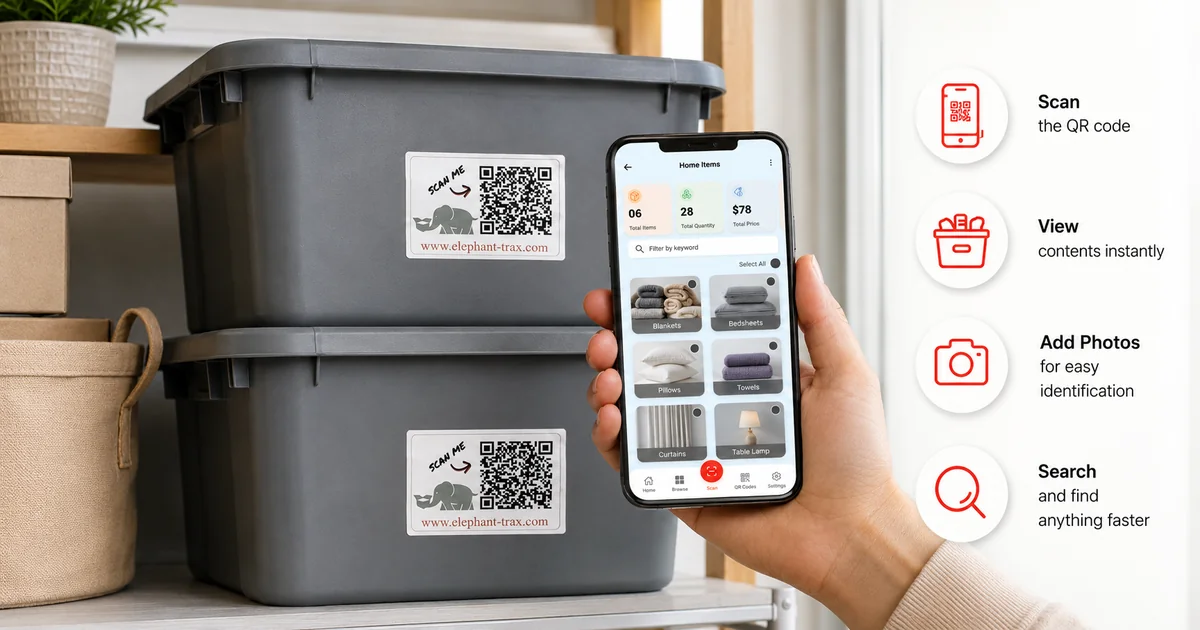
When you attach a QR code sticker to a bin and connect it with an inventory record, the physical container becomes linked to useful digital information. Depending on your organization system, that record can include item names, photos, descriptions, categories, and other details.
Elephant Trax is designed around this concept. Users can photograph items, associate them with containers, and scan a label to see the information later. The platform also supports searching by keywords and images, making it easier to locate stored belongings without opening multiple containers.
Instead of asking, “Which bin has the Christmas lights?” you can search your inventory and identify the relevant container.
Turn Every Storage Bin Into a Searchable Container
One of the biggest advantages of digital labeling is that the outside of a bin no longer needs to contain the complete inventory.
For example, imagine you have six identical plastic containers in your garage.
Instead of writing:
- Tools
- Camping
- Holiday
- Cables
- Decorations
- Miscellaneous
you can create a digital record for each container.
The physical label identifies the bin, while the digital record provides the details. You can add photos and descriptions so that you know what is inside before moving the container from a shelf.
This approach is particularly useful when bins look nearly identical.
Make Seasonal Storage Easier
Seasonal items are among the easiest belongings to forget.
Christmas decorations may stay packed for most of the year. Summer camping equipment may remain untouched during winter. Holiday dishes, sports equipment, winter clothing, and outdoor accessories can all end up in long-term storage.
A searchable inventory gives you a better way to manage these items.
For example, before searching through your garage for outdoor lights, you can look up “outdoor lights” in your Elephant Trax inventory. Once you identify the associated container, you know which bin to retrieve.
This can make seasonal changes considerably less frustrating.
Add Photos for Faster Identification
Words are useful, but photographs can provide an even clearer picture of what is stored.
Suppose a bin contains several kitchen appliances, baking supplies, and serving accessories. A label saying “Kitchen” does not tell you much.
Adding photos to the digital record provides visual context. You can recognize the contents before opening the container, which is especially helpful when you have many similar bins.
Elephant Trax supports photographing items and using AI-powered tagging to make stored information easier to search.
For people who manage large amounts of household storage, this can turn a collection of anonymous containers into an organized visual inventory.
Use Smart Labels Instead of Guesswork
The goal of smart labels is not simply to make containers look organized. They should make the information behind those containers easier to access.
A useful labeling system should answer questions such as:
- What is inside this bin?
- Where is the bin located?
- Which container holds a specific item?
- Can I identify the contents without opening it?
- Can I update the information when something moves?
Elephant Trax’s QR labeling system is designed to connect containers with digital records, allowing users to scan and view contents, photos, and searchable information.
That makes the system useful beyond basic home organization. It can also support moving, garage storage, office supplies, equipment, and other inventory needs.
A Sticker With QR Code Can Save Time During a Move
Moving is another situation where organized storage becomes extremely important.
When dozens of boxes are packed at once, writing only “Bedroom” or “Kitchen” on each box may not be enough. You may need one specific item before everything is unpacked.
A sticker with QR code can connect each box to its digital contents. Instead of opening several boxes to locate an item, you can check the inventory first and identify the correct container.
Elephant Trax also supports moving and logistics use cases, allowing users to organize boxes and check their contents through QR-based tracking.
For families, professional organizers, and people preparing for a move, this can make both packing and unpacking more manageable.
Create a Simple Storage Organization Routine
You do not need to label every item in your home at once. Start with the areas that cause the most frustration.
Step 1: Choose a Storage Area
Begin with your garage, basement, attic, closet, or storage unit.
Step 2: Group Similar Items
Keep seasonal decorations, tools, clothing, documents, hobbies, and other categories together.
Step 3: Photograph Important Items
Take clear photos of items or groups of belongings before placing them into containers.
Step 4: Assign Each Container
Give every bin its own digital inventory record.
Step 5: Attach the Label
Place the QR label somewhere visible and easy to scan.
Step 6: Update When Contents Change
If you remove or add something, update the corresponding record. Keeping digital information current is what makes the system useful over time.
What to Look for When Choosing QR Storage Labels
Not every labeling solution provides the same experience. Before choosing one, consider whether it offers:
- Easy scanning with a smartphone
- Searchable inventory information
- Support for photos and descriptions
- Simple updating when contents change
- Clear identification for individual containers
- Access across your preferred devices
- Durable labels suitable for your storage environment
Elephant Trax offers QR label printing with options to print labels at home or order ready-made labels, while its system connects labels to digital inventory records.
If you’re researching the Elephant Trax 40-label option, you can also see this Elephant Trax QR storage label listing for additional product information.
Make Your Storage Work Smarter With Elephant Trax
Organizing storage bins is not only about making a room look neat. The real benefit comes from being able to find your belongings when you actually need them.
Elephant Trax combines physical QR labeling with digital inventory management so you can organize containers, add item information, search your belongings, and check contents from your phone. Its system is designed for home storage as well as moving, equipment tracking, offices, and other organization needs. Ready to simplify your storage? Get your Elephant Trax QR labels on Amazon and start organizing smarter today.
Instead of opening bin after bin, you can scan, search, and find the information you need.
Ready to make your storage easier to manage? Explore Elephant Trax and turn your ordinary storage bins into a searchable inventory.

