
How to Organize Storage Bins So You Never Forget What’s Inside
Storage bins are one of the easiest ways to keep a home tidy. They can hold seasonal decorations, children’s belongings, clothing, documents, tools, and countless other items. But there is one common problem: after everything is packed away, it can be surprisingly difficult to remember what is inside each bin.
A good storage system should do more than hide clutter. It should help you find what you need without opening multiple containers or searching through piles of boxes. With a simple storage bin reset, consistent labeling, and a digital inventory, you can turn an ordinary collection of containers into an organized system that works for your entire household.
Start With a Storage Bin Reset
Before creating a better organization system, start with a complete storage bin reset. Instead of adding more containers, take some time to review what you already have.
Bring your household storage bins into one area if possible. Open each container and group similar items together. Look for things you no longer use, duplicates, damaged belongings, or items that could be donated.
This step is important because organizing unnecessary items only creates more work later. Once you have removed things you no longer need, you can begin putting the remaining belongings into logical categories.
For example, you might create separate groups for:
- Holiday decorations
- Seasonal clothing
- Children’s toys
- Important documents
- Craft supplies
- Sports equipment
- Tools and household supplies
The goal is to make every container serve a clear purpose.
Create Storage Bin Systems That Make Sense
A well-planned organization method makes it easier for everyone in the household to know where things belong. Instead of randomly filling available containers, create storage bin systems based on categories, rooms, activities, or how frequently items are used.
For example, frequently used items should be stored somewhere easy to reach, while seasonal belongings can go toward the back of a closet, attic, basement, or garage.
You can also assign categories to specific areas. One shelf could contain holiday items, another could hold seasonal clothing, and another could contain household supplies.
Consistency matters. If every container follows the same basic organization system, finding something later becomes much easier.
Label Every Bin Clearly
One of the simplest ways to prevent storage confusion is to label every container. However, a label should tell you more than just “Clothes” or “Christmas.”
Try to make labels specific enough that you can understand the contents at a glance.
Instead of:
Clothes
Use:
Winter Clothes – Kids – Sizes 8–10
Instead of:
Decorations
Use:
Christmas Decorations – Tree Ornaments & Lights
Detailed labels reduce the need to open containers just to check their contents.
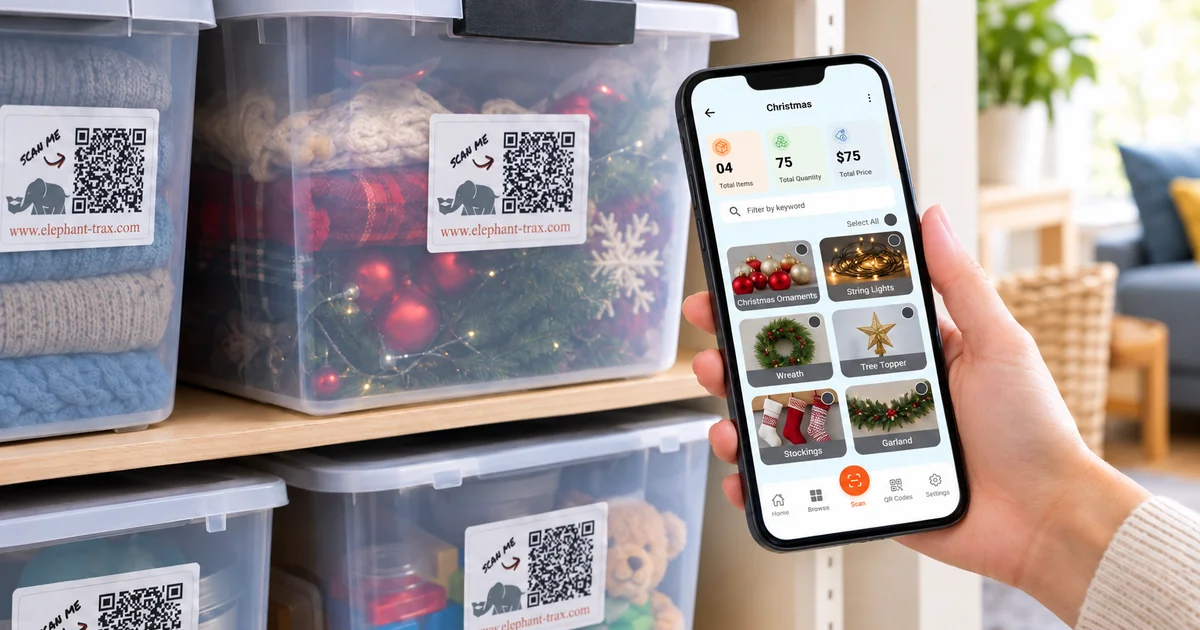
For an even smarter approach, consider using QR code labels. A QR code can connect a physical storage container with digital information about what is stored inside.
Use QR Code Labels for a Smarter Inventory
Traditional labels are useful, but they have limitations. A container may hold dozens of individual items, and there may not be enough room on a physical label to list everything.
This is where QR code organization can make a difference.
With Elephant Trax, you can attach a QR label to a storage bin and use the Elephant Trax app to associate information with that specific label. You can add photos and keywords so you have a digital reference for the contents.
Instead of opening five bins to find a particular item, you can scan the appropriate label and check the information connected to it.
This is especially helpful when containers are stacked or stored in areas that are not accessed regularly.
Build a Home Inventory as You Organize
A well-organized home inventory can help you keep track of belongings beyond simply knowing which bin they are in.
As you organize, consider recording useful details such as the item’s category, location, photos, and keywords. This creates a reference point that can make future searches much easier.
For example, imagine you are looking for a specific holiday decoration. You may remember owning it but have no idea which container contains it.
With a digital inventory, you can search your stored information instead of relying entirely on memory.
This can be particularly useful for large households where multiple family members move things around or when storage areas contain many similar-looking containers.
Take Photos Before Closing the Bin
Photos can make your organization system even more useful. Before closing a storage bin, take a quick photo of its contents.
A photo provides visual information that a short text label cannot always communicate. You can see the types of items inside without physically opening the container.
When using a digital storage system, photos can be connected to the relevant container or QR code. This gives you another way to identify what’s inside.
For example, a bin labeled “Kitchen Backup Supplies” might contain several different items. A photo lets you quickly recognize the contents before deciding whether you need to open it.
Keep Similar Items Together
Another important rule is to avoid mixing unrelated categories.
It may seem convenient to place extra blankets, children’s toys, and holiday decorations into one partially empty bin. However, this can make the container difficult to search later.
Instead, keep similar belongings together whenever possible.
You can also divide large categories into smaller groups. Rather than having one giant “Holiday” bin, consider separate containers for Christmas decorations, outdoor decorations, wrapping supplies, and seasonal tableware.
This makes both physical storage and digital tracking more manageable.
Store Bins So Labels Are Easy to See
Even the best labeling system will not help if labels are hidden behind other containers.
When stacking bins, position them so the labels remain visible. If possible, keep frequently accessed containers at waist or eye level.
You can also number shelves or storage areas to create a more structured system. For example, you could have Shelf A for seasonal items and Shelf B for household supplies.
Combining location organization with clear labels and digital information creates a system that is much easier to maintain.
Make Organization Easier for the Whole Family
A storage system works best when everyone follows the same rules.
Make sure family members understand where different categories belong and encourage them to return items to their original containers.
QR-based organization can also make this easier because family members don’t have to rely on one person’s memory. They can scan a label and check the information associated with the container.
Over time, this reduces the common problem of someone asking, “Where did we put that?”
Reset Your Storage System Regularly
Organization is not a one-time project. As your household changes, the contents of your storage containers will change too.
Consider doing a small storage reset every few months or at the beginning of a new season. Remove items you no longer need, update labels, and add new belongings to your inventory.
If a bin’s contents change significantly, update its digital information as well. Keeping your system current prevents it from becoming another source of confusion.
Organize Once and Find Things Faster
The best storage system isn’t necessarily the one with the most containers. It’s the one that makes your belongings easy to identify, locate, and access.
By completing a storage bin reset, grouping similar items, creating consistent storage bin systems, and using detailed labels, you can create a much more functional home organization routine.
For households that want to go beyond traditional labels, QR code labels provide a convenient way to connect physical storage with digital information. Elephant Trax makes it possible to associate QR labels with photos and keywords, giving you a practical way to keep track of what’s inside your bins.
Instead of wondering what is hidden inside every container, you can create a home inventory that helps you know where your belongings are—and find them when you actually need them.

