
QR Storage Labels: The Future of Smart Home Storage
Home storage has changed. Instead of simply putting belongings into boxes, bins, closets, and storage units and hoping to remember where everything went, homeowners can now create a digital system that makes stored items easier to identify and find.
Traditional handwritten labels can tell you that a container holds “Christmas,” “Kitchen,” or “Clothes,” but they cannot show you everything inside. When several containers look the same, finding one specific item can quickly become frustrating. This is where QR Storage Labels offer a smarter approach.
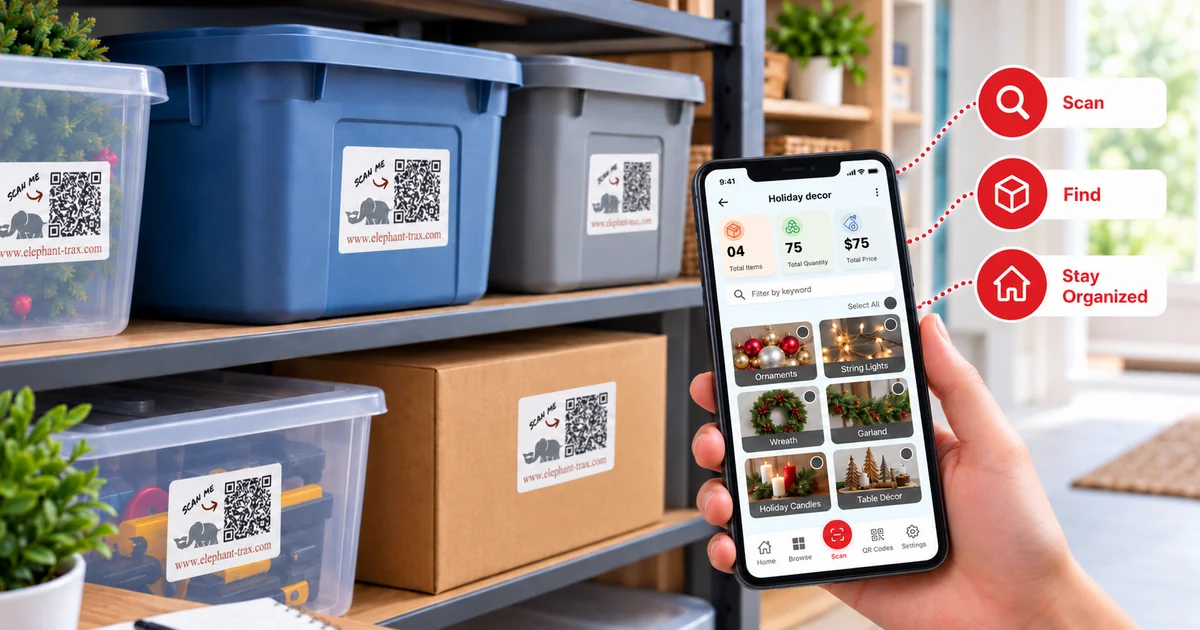
With Elephant Trax, physical storage containers can be connected to a digital inventory. By placing a QR label on a box or bin, users can scan it with a phone and access the information associated with that container. Instead of opening multiple boxes to find one item, the digital inventory provides a faster way to understand what is stored inside.
What Are QR Storage Labels?
QR storage labels are scannable labels that connect physical storage containers with digital information. A QR code can be placed on boxes, bins, trunks, drawers, or other containers, allowing users to connect the physical location of their belongings with a digital record.
For home organization, the concept is simple: instead of relying only on a written description, a QR code becomes a digital doorway to the information associated with a storage container.
Elephant Trax takes this concept further by connecting QR labels with item information such as photos, names, notes, keywords, categories, quantities, and locations. This creates a more detailed digital record of what is inside each box.
Why Traditional Storage Labels Are Not Enough
Traditional labels are useful, but they have limitations.
A handwritten label might say “Winter Clothes,” but it does not necessarily tell you whether your blue jacket, gloves, boots, or scarves are inside. If you need one particular item, you may still have to open several containers.
The problem becomes even bigger when storage areas contain dozens of similar boxes. Over time, labels can also become damaged, faded, outdated, or difficult to read.
A digital labeling system solves this problem by adding information underneath the physical label. The outside of the box remains simple, while the QR code connects it to a detailed digital inventory.
This means your storage system can provide both physical identification and digital visibility.
How Elephant Trax Turns Boxes Into Smart Storage
Elephant Trax is designed to make storage more searchable and manageable. The basic process follows three simple steps: pack, scan, and find.
First, users can photograph and record the items they are storing. Item names, notes, keywords, categories, and other details can be added to create a digital inventory.
Next, a QR label is assigned to the appropriate box or container. Once the label is attached, scanning it can show the information connected to that storage container.
Finally, when something is needed, users can search their digital inventory or scan the relevant QR code to identify the contents without physically opening every container.
This approach changes storage from a collection of unidentified containers into an organized, searchable system.
The Role of a Storage Inventory App
A physical label is only part of a modern storage system. The real advantage comes from connecting the label to digital information.
A storage inventory app can help homeowners maintain a record of what they own and where it is stored. Instead of creating a spreadsheet that needs to be manually updated, a dedicated system can connect individual items with specific boxes and locations.
Elephant Trax allows users to search inventory by information such as item name, keyword, box label, location, or category. This makes it easier to locate belongings when they are needed.
For example, imagine storing holiday decorations in ten different containers. Rather than opening each container, you could search for “Christmas lights” and identify the box associated with that item.
This is especially useful for seasonal belongings, moving boxes, garage equipment, documents, children’s items, tools, clothing, and other possessions that may remain stored for months.
Why QR Labels Are Useful for Storage Bins
Storage bins are excellent for keeping spaces tidy, but they can become difficult to manage when many bins contain different belongings.
Using labels for storage bins creates a consistent identification system. Each bin can have its own QR code, allowing the physical container to be connected to its digital inventory.
For example, a garage could contain bins for:
- Holiday decorations
- Gardening equipment
- Sports gear
- Car supplies
- Tools
- Seasonal clothing
Instead of relying only on category names, each bin can have a QR code connected to the items inside.
Elephant Trax supports QR labels for boxes, bins, trunks, and other storage containers, making the system adaptable to different areas of a home.
Save Time When Searching for Stored Items
One of the biggest advantages of smart storage is reducing the time spent searching.
Most people do not struggle with putting something into storage. The real problem happens later when they need to find it.
A box may have been placed on a high shelf months ago. Several other containers may look identical. Without a detailed inventory, finding one small item can turn into a long search.
QR-based organization provides a shortcut. Instead of physically inspecting every container, users can use their digital inventory to identify where an item belongs.
The goal is simple: know what you own, know where it is, and find it when you need it.
Make Moving and Reorganizing Easier
QR storage systems are also useful beyond everyday home organization.
Moving is one situation where storage information can quickly become confusing. Boxes may be packed in a hurry, moved between rooms, and eventually placed in a garage, basement, attic, or storage unit.
With QR labels, each box can remain connected to its digital inventory throughout the move. Users can record what belongs in each box and later search for specific belongings without opening every container.
Elephant Trax is designed for moving and relocation as well as home storage, giving users a way to maintain a digital record while their belongings move from one location to another.
Create a More Organized Home Inventory
Smart storage is not only about finding things faster. It can also help homeowners understand what they actually own.
When belongings are digitally recorded, it becomes easier to identify duplicate purchases, forgotten items, seasonal belongings, and things that may no longer be needed.
A searchable inventory can also provide useful documentation. Elephant Trax offers inventory export options that can be useful for moving records, insurance documentation, audits, and backup purposes.
This turns home organization into a more complete inventory-management process rather than simply labeling containers.
The Future of Home Storage Is Digital
Home organization is becoming more connected and technology-driven. Smart devices already help people manage lighting, security, appliances, and other aspects of their homes. Storage can benefit from the same approach.
QR Storage Labels combine a simple physical label with digital information. The label itself remains easy to use, while the connected inventory provides much more detail than traditional handwriting can offer.
As QR and other 2D barcode technologies continue to develop, digital identification is becoming increasingly useful across different industries and applications. GS1 identifies QR codes as one of the widely recognized 2D barcode formats and highlights their ability to connect physical identification with digital information.
For homeowners, the benefit is practical: fewer searches, less unnecessary unpacking, and better visibility into stored belongings.
How to Start Using QR Storage Labels
Getting started does not require reorganizing your entire home in one day.
Begin with the storage area that causes the most frustration. This could be a garage, attic, basement, closet, or storage unit.
Sort the belongings into appropriate containers and photograph the items as you pack them. Add useful information to your digital inventory, such as item names, categories, keywords, and locations.
Then assign a QR label to each container and place it somewhere easy to scan. Elephant Trax supports both printed and ordered QR labels, allowing users to choose the labeling method that works best for their storage setup.
Once the system is established, continue adding new boxes and updating existing records as your belongings change.
Why Elephant Trax Is a Smart Choice for Home Storage
At Elephant Trax, we believe storage should be about more than hiding belongings away. A well-organized storage system should help you know what you own and find it when you need it.
Our combination of QR labels, digital inventory, search tools, photos, and smart tagging helps transform ordinary containers into searchable storage. Whether you are organizing a garage, preparing for a move, managing seasonal items, or simply trying to keep your home clutter-free, the system is designed to make finding stored belongings easier.
Instead of opening box after box, you can use your phone to connect your physical storage with your digital inventory.
Conclusion
The future of home storage is not simply about having more containers. It is about knowing what is inside those containers and being able to find it quickly.
QR Storage Labels provide a practical bridge between physical organization and digital inventory. When combined with a storage inventory app, they can make boxes, bins, and other containers easier to track and search.
For homeowners looking for a smarter way to organize their belongings, Elephant Trax provides a simple approach: pack your items, connect them to QR labels, and find them when you need them.
Smart storage does not have to be complicated. With the right system, every box can become easier to identify, every bin can become searchable, and your entire home inventory can become easier to manage.

